

Quick Answer
Saint Tukaram (1608-1650) was a Marathi poet-saint of the Varkari tradition, born at Dehu on the river Indrayani near Pune. A grain trader and householder left with nothing by the great Deccan famine, he composed more than four thousand abhangs in praise of Vithoba of Pandharpur, was tried for heresy by the local Brahmins and made to sink his manuscripts in the river. The Varkari tradition counts him among its four great saints, with Dnyaneshwar, Namdev and Eknath.
Key Facts at a Glance
- Born: 1608, at Dehu in Pune district, Maharashtra, on the bank of the Indrayani
- Family: Bolhoba and Kanakai of the More family, a Kunbi cultivator household
- Livelihood: grain trade, small moneylending and the village mahajan office
- First wife: Rakhma, who died with a son in the famine of 1629-30; his second wife was Jijai
- Guru: Babaji Chaitanya, by tradition
- Composed: the Gatha, more than 4,000 abhangs in Marathi; the standard edition prints 4,607
- Chosen deity: Vithoba, also called Vitthal or Pandurang, of Pandharpur
- Tradition: Varkari, whose walking pilgrimage to Pandharpur is called the vari
- End of his life: 1649-1650 at Dehu; the tradition says Vithoba took him to Vaikuntha
- Signature: every abhang closes with the words Tuka says, in Marathi Tuka mhane
Who was Saint Tukaram?
Saint Tukaram Maharaj is the last of the four great saints of the Varkari tradition of Maharashtra, the poet who made the abhang the most loved form of Marathi devotional song. He was not a renunciate, not a pandit and not a man of letters in any formal sense. He was a village householder of Dehu, a grain trader who kept a shop, weighed grain in the market and collected dues as the village mahajan. The verses he left behind are addressed to Vithoba of Pandharpur with an intimacy that has no equal in Marathi literature: he argues with the god, scolds him, tells him plainly that he is the last remaining wealth of a poor man.
That is what makes him so easy to enter. Four hundred years after his death, hundreds of thousands of people walk from Dehu and Alandi to Pandharpur every year singing his lines, and the abhangs of Tuka are still sung in kirtan in ordinary homes.
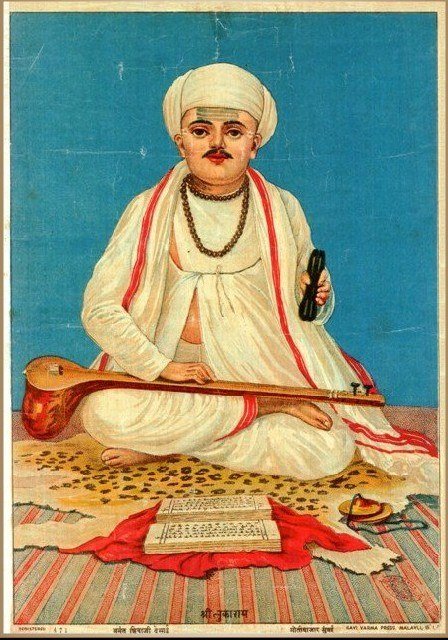
Dehu, the Indrayani and a Kunbi household
Tukaram was born in 1608 at Dehu, a village on the Indrayani river in what is now Pune district. His parents were Bolhoba and Kanakai, of the More family, counted among the Kunbi cultivators. The tradition has it that the family belonged to the Maratha Kunbi community and enjoyed a certain standing in the village: they held land, ran a grain trade, and Tukaram was instructed in the family business. His father died early, and before he was twenty his elder brother Savaji left home for pilgrimage after the death of his wife and never returned. The whole burden of the household fell on Tukaram.
The Vithoba devotion of Pandharpur was not new to the family. In Maharashtra the householders of many communities kept the discipline of the vari, the walk to Pandharpur on the two great Ekadashis of Ashadh and Kartik, and Tukaram inherited that devotion along with the shop.
The famine of 1629 and the end of his old life
Around 1629 and 1630 a famine of exceptional severity fell on the Deccan. The rains failed, the rivers shrank, grain disappeared and people died with the cattle. Tukaram opened his stores to those who came, but he could not hold back what was happening to everyone. His first wife Rakhma died in that famine, and a son with her. The trade collapsed, debts remained, and the village stripped him of his mahajan office. By the tradition recorded in the hagiographies, this is the moment when the worldly account of his life closed and the other account began.
He did not leave his family. He married Jijai, and kept house, and did what work he could, but the centre of his life had moved to what he called the wealth that does not run out. The bitterness of that time is not hidden in the abhangs. He says in many verses that his store was emptied on purpose, and that he found in exchange the one thing he could not lose.
Namdev in a dream: how the abhangs began
Devotional tradition holds that Namdev, the thirteenth century saint whose Marathi verses were already sung everywhere in Maharashtra, came to Tukaram in a dream and told him to compose. Tukaram took up the same abhang form that Namdev had used, and for the rest of his life the verses came. He also received guidance, the tradition says, from Babaji Chaitanya, who is remembered as his guru.
The later years of that instruction are described as a long discipline: hours of contemplation in a cave on the Bhamnath hill above Dehu, reading the Bhagavad Gita, the Bhagavata, the Dnyaneshwari and the collected verses of Namdev and Eknath, and a growing refusal to value anything that time could take away. He remained a householder. He did not become a sannyasi, and the abhangs keep returning to that single fact.
What is an abhang?
An abhang is a short Marathi devotional stanza meant to be sung, built on repeated lines in which a kirtankar and the listening group answer each other. It is simple in language and strict in form, and in the Varkari tradition it has a fixed place: sung during the palkhi, in temple kirtan, in the bhajan hall and in the family room. Tukaram used the form for every kind of speech, from blunt complaint to the most tender surrender, and each verse closes by naming its author: Tuka says.
The Marathi is deliberately the Marathi of the village, not of the shastra. That was the whole claim of the Varkari saints, and Tukaram, born into a community that was told it had no right to the Vedas, pressed that claim harder than anyone before him.
The Gatha: four thousand abhangs and more
The collected abhangs of Tukaram are called the Gatha. The standard Marathi edition, published in 1873 from the Indu Prakash Press, brings together 4,607 of them, and the Gatha Mandir at Dehu has more than four thousand of these verses carved on its walls. No single manuscript in the poet hand holding the whole corpus exists, and scholars have long noted that the Gatha grew by accretion: later singers composed verses in the voice of Tuka, and those verses were absorbed into his name, as happened with Kabir and with Mirabai.
The number is therefore best read as a living tradition rather than a census. What is certain is the place of that body of song in Marathi life, where it is sung daily, and the sound of the language it fixed for centuries of poetry after him.
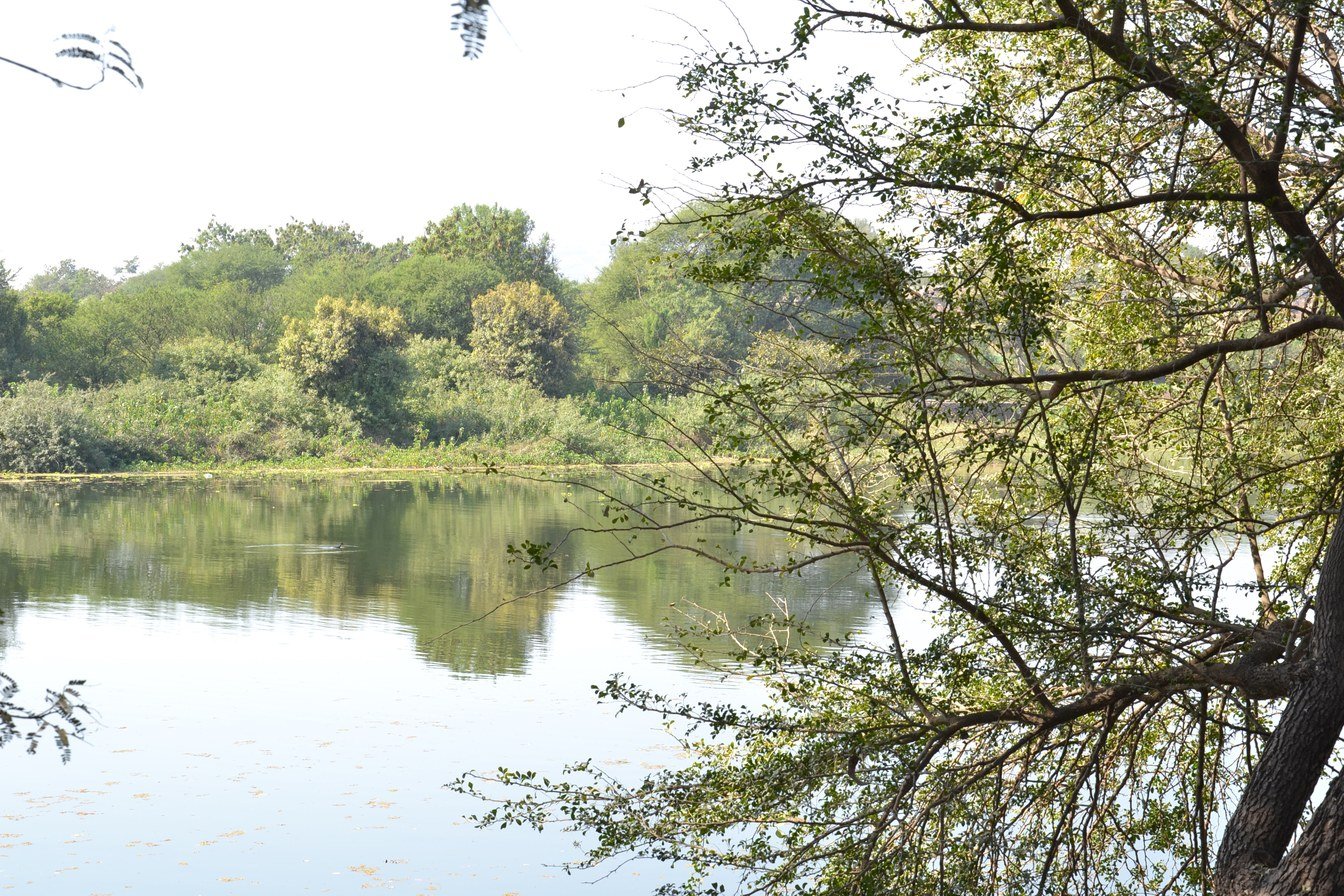
The Indrayani trial: when his poems were thrown in the river
Tukaram stood accused by the local religious establishment. A Brahmin named Mambaji Gosavi, the tradition records, took offence at a Kunbi composing and singing scripture in Marathi, and the matter went to the village assembly. In those circumstances suspicion hardened into a charge of heresy, and the sentence was the destruction of his writings.
According to the tradition, Tukaram carried his palm leaf manuscripts to the Indrayani and sank them in the water, saying that the god who had received the verses would have to answer for them. The story continues that he then began a fast, and that after thirteen days the manuscripts were returned to him from the river, and some of those who had persecuted him became his listeners. The fast, the return of the manuscripts and the repentance of his opponents are hagiography rather than recorded history, and the Varkari tradition itself tells them as such. What no one disputes is the shape of the accusation, or that his poems went into the Indrayani, and that the verses survived the men who demanded their destruction.
Tukaram and the Varkari path to Pandharpur
The Varkari tradition, the largest devotional movement of Maharashtra, is built around two pilgrimages a year to the temple of Vithoba at Pandharpur, on the Ekadashis of the month of Ashadh and of Kartik. The pilgrims walk in groups called dindis, singing abhangs, and the walk itself is the discipline, the vari. Tukaram walked it many times, and the palkhi that carries his padukas still leaves Dehu for Pandharpur every year during Ashadh.
In the Varkari order of things Vithoba is Vithoba of Pandharpur, the dark stone figure standing on a brick with his hands on his hips, understood as a form of Vishnu in his Krishna aspect. Tukaram addresses him as a neighbour and a witness rather than as a distant king, and the ordinary world of Maharashtra, its rivers, trees, birds and household quarrels, fills page after page of the abhangs.
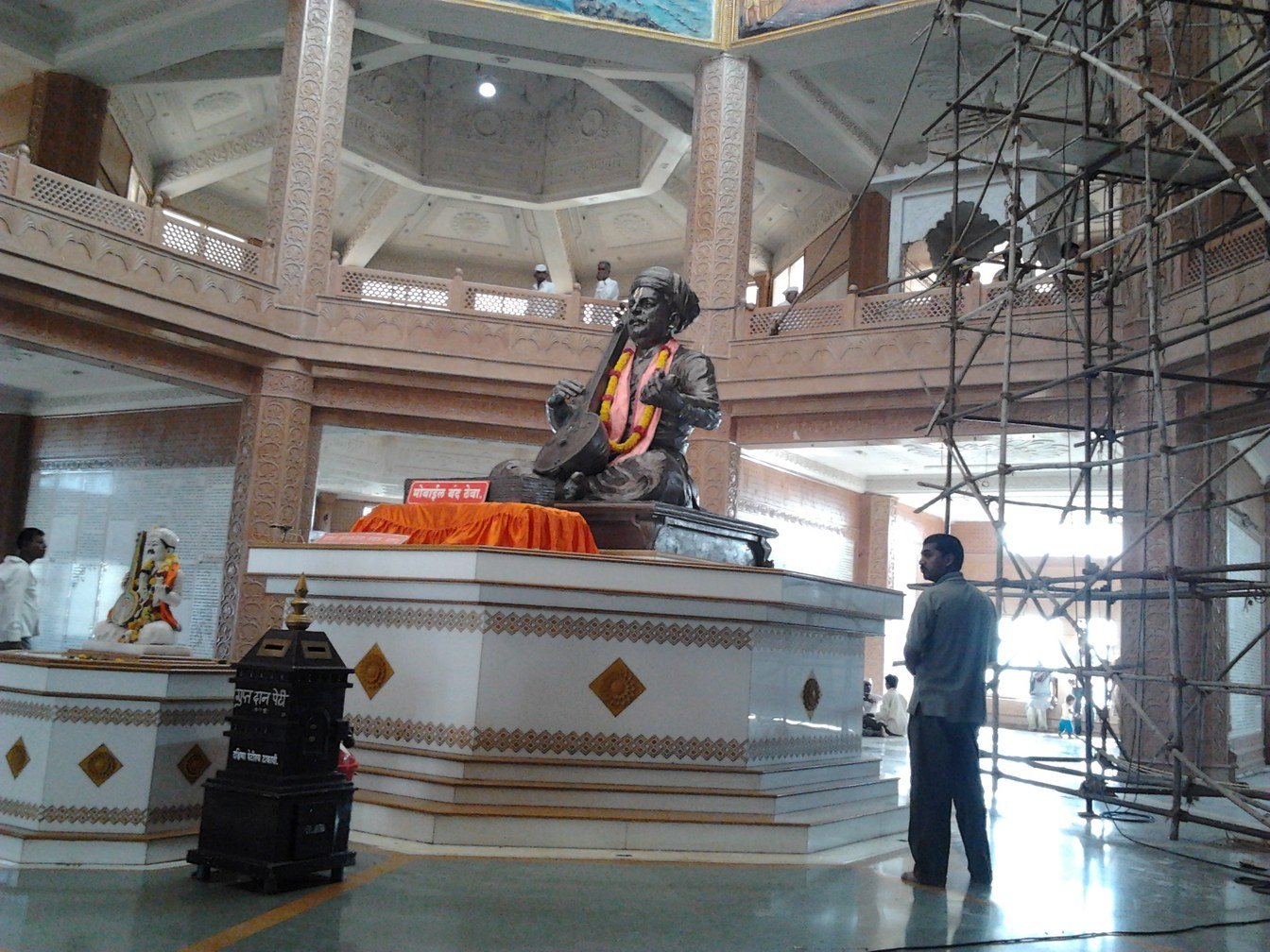
The teachings of Saint Tukaram
Tukaram did not write a treatise. His teaching is in the verses, and it can be summarised in a few points that he returns to again and again:
- The name is the path. To remember the name of Vithoba with love is the whole discipline, and it is open to every person, in any condition of life.
- Caste pride is empty. Birth, wealth and learning, he says, cannot carry anyone across; the devotee among the so called low is nearer to the god than the proud scholar. This is the sharpest of his themes, and the reason the temple poetry of Maharashtra reads as a moral argument as well as devotion.
- The householder can be a saint. Tukaram married, traded, fed a family and was not released from his duties. He offered his own life as proof that one does not need to leave the world in order to hold the god in it.
- Honest speech and plain words. He refuses ornament and flattery in his own verses, and asks for the same honesty from his listeners.
- Surrender instead of argument. The last movement of an abhang is almost always the same: having complained, argued and scolded, the poet lets go and asks to be accepted as he is.
Three glimpses from the abhangs
The verses are short and repeated lines, so the sense of a few of the best known ones travels even in a single sentence. In Vrikshavalli amha soyari vanachare he says that the trees and creepers are his kin and the creatures of the forest his own people, and asks whether anyone is a stranger: it is a Varkari answer to the quarrels of the world. In another he tells his own mind that everything visible is the same one standing behind all names, and that a mind free of envy is already where it wants to go. And the abhang form itself carries the signature that has become his name in every Marathi household: Tuka mhane, Tuka says.
English readers who want the verses themselves have two old and careful guides: the translations of J. Nelson Fraser and K. B. Marathe from the early twentieth century, and the selection published by Dilip Chitre as Says Tuka in 1991. Readers of Marathi have the Gatha itself, which is still printed, still sung, and still memorised by the pilgrims on the road.
Shivaji Maharaj and Tukaram: history or tradition?
The meeting of Chhatrapati Shivaji Maharaj and Tukaram is one of the most loved episodes in the popular memory of Maharashtra, described as a meeting of bhakti with shakti: the king coming to Dehu to hear the saint sing, or sending him gifts which Tukaram returned, saying he had no use for what he could not carry with him. A Marathi document associated with the Shivaji court, the Zadpatra, carries a defence of Tukaram against his detractors, and the episode is told in the village as history. Scholars treat the exact details with caution, because the early documentation is thin. The safest reading is the one the tradition itself offers: whatever passed between them, the story records a truth about the times, that the bhakti of the saints and the power of the Maratha state grew out of the same soil.
How his life ended
The record of his life stops in 1649 or 1650. The Varkari tradition does not say that he died. It says that he was taken, that Vithoba himself came for him and carried him to Vaikuntha, and the day is remembered as Tukaram Beej in Kartik. Hagiographers describe a chariot of light; a few modern writers suggest that he may simply have walked out of Dehu one day, singing, and not come back. Either way there is no grave to visit in the ordinary sense. At Dehu there is his samadhi shrine, the temple of Tukaram Maharaj with its padukas, and near it the Gatha Mandir raised in the twentieth century with the abhangs carved on its walls.
Why Saint Tukaram still matters
Marathi literature counts Tukaram as its single most influential poet, and the records of that influence are not literary only. The abhangs are the working vocabulary of the Varkari pilgrimage, which brings hundreds of thousands of people on foot to Pandharpur twice a year; they are sung in kirtan in towns and villages across Maharashtra; they are quoted by social reformers, poets and politicians because the verses about caste and about the dignity of the ordinary person are as pointed today as they were in the sixteenth or seventeenth century. A Kunbi shopkeeper who was told that the language of scripture was not his did what no one could take back: he wrote in the language of his own village, and the village has been singing it ever since.
For anyone drawn to the saints of India, Tukaram is the clearest example of what bhakti claimed at its boldest, that the door of the divine does not open on qualification, caste or learning but on love, and that a householder with a failing shop may stand as close to Vithoba as the priest in the sanctum.
Frequently Asked Questions
Who was Saint Tukaram?
Saint Tukaram Maharaj was a Marathi poet-saint of the Varkari tradition, born in 1608 at Dehu on the river Indrayani near Pune. A grain trader and village householder, he composed more than four thousand abhangs in praise of Vithoba of Pandharpur and is counted among the four great saints of the Varkari path with Dnyaneshwar, Namdev and Eknath.
Where was Saint Tukaram born?
He was born in 1608 at Dehu, a village on the bank of the Indrayani river in Pune district, Maharashtra, in a Kunbi household of the More family. His father was Bolhoba and his mother Kanakai, and the family lived by the produce of its land, by grain trade and by the village mahajan office.
How many abhangs did Saint Tukaram write?
The collected abhangs form the Gatha, and the standard Marathi edition prints 4,607 of them. The Gatha Mandir at Dehu has over four thousand verses carved on its walls. Scholars note that the corpus grew over time because later singers composed verses in the voice of Tuka, so the count is best understood as a living tradition.
Who was the guru of Saint Tukaram?
The tradition names Babaji Chaitanya as his guru. Devotional accounts also say that Namdev, the thirteenth century Marathi saint, appeared to him in a dream and told him to compose abhangs, and that he then took up the same verse form that Namdev had used.
Why did Saint Tukaram throw his poems into the Indrayani river?
By the traditional account he was accused of heresy by the local religious authorities for composing and singing scripture in Marathi as a member of a cultivator community. He was ordered to destroy his manuscripts, and he sank them in the Indrayani. The Varkari tradition says that after a fast of thirteen days the verses were returned to him from the river, and that some of his opponents became his followers.
What is the Varkari tradition?
Varkari means the one who performs the vari, the walking pilgrimage to the temple of Vithoba at Pandharpur in Maharashtra on the Ekadashis of the months of Ashadh and Kartik. Pilgrims travel in groups called dindis and sing abhangs on the road. Saint Tukaram, Dnyaneshwar, Namdev and Eknath are the four greatest saints of this tradition, and the palkhi of Tukaram Maharaj still leaves Dehu for Pandharpur every year.
Where is the samadhi of Saint Tukaram?
At Dehu there is the samadhi shrine of Tukaram Maharaj with his padukas, and near it the Gatha Mandir, built in the twentieth century, where thousands of his abhangs are carved on the walls. The Varkari tradition holds that he did not die in the ordinary sense but was taken to Vaikuntha, which is why the memorial is a place of remembrance rather than a burial ground.
Sources and references
- Mahipati, Bhaktavijay (1762) and Bhaktalilamrt (1774), the Varkari hagiographies of Tukaram, translated in J. Abbott and N. R. Godbole, Stories of Indian Saints, Motilal Banarsidass.
- Marathi Vishwakosh (Government of Maharashtra encyclopaedia), entry तुकाराम (Tukaram), vishwakosh.marathi.gov.in.
- MANAS, University of California Los Angeles, article on Tukaram, southasia.ucla.edu.
- J. Nelson Fraser and K. B. Marathe, The Poems of Tukaram, Christian Literature Society, Madras, 1909 to 1915.
- Dilip Chitre, Says Tuka, Penguin Books, 1991.
- S. G. Tulpule, Classical Marathi Literature, Otto Harrassowitz, 1979.
- Tukaram Gatha, standard Marathi edition, Indu Prakash Press, Bombay, 1873.
- Marathi sources on Dehu, the Gatha Mandir and the Tukaram Maharaj palkhi (Varkari Sampradaya publications).
Related reading
Great saints and sages of India – the VedicFeed archive
Goswami Tulsidas – life and works of the saint poet
Mirabai and her bhakti for Sri Krishna
Hari Shayani Ekadashi – the day Vishnu sleeps
Ekadashi dates through the year
Sri Ramakrishna Paramahamsa – the great sage of the 19th century
Swami Vivekananda – the saint who carried Hindu thought to the world