
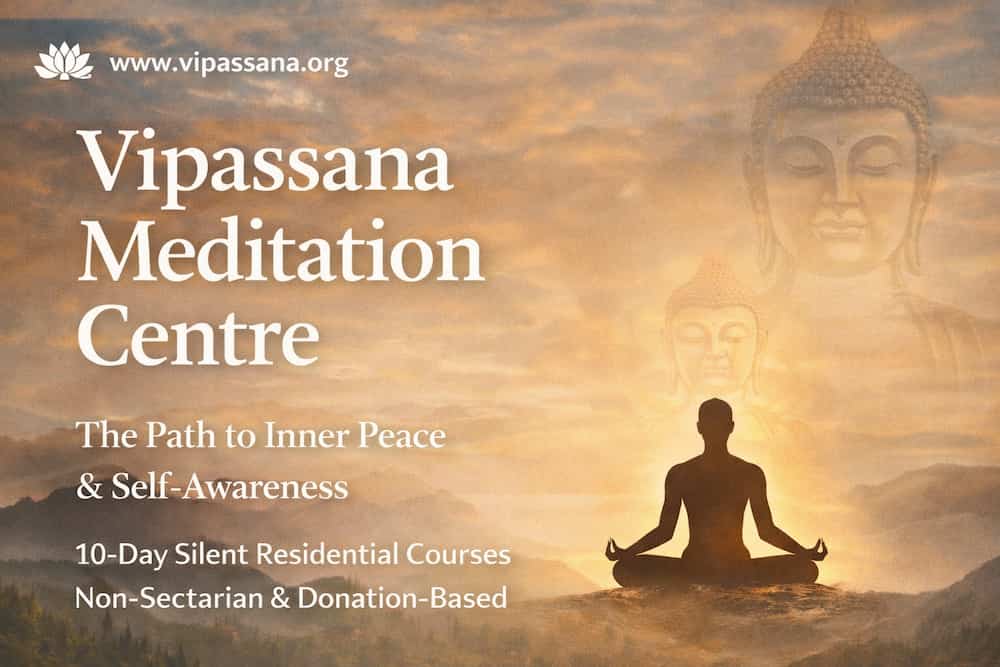
A Vipassana Meditation Centre is a place dedicated to teaching Vipassana, one of India’s most ancient meditation techniques. Vipassana means “to see things as they really are” and focuses on developing deep self-awareness through observation of breath and bodily sensations.
This technique was rediscovered and preserved by Gautama Buddha more than 2,500 years ago and continues to be taught worldwide in its pure, non-sectarian form.
What Happens at a Vipassana Meditation Centre?
Most Vipassana Meditation Centres follow the tradition taught by S.N. Goenka and offer free residential meditation courses, typically lasting 10 days.
Daily Routine Includes:
- Silent meditation (Noble Silence)
- Guided instructions and discourses
- Fixed meditation sessions
- Simple vegetarian meals
- Strict ethical guidelines
There are no fees charged—courses are supported entirely by voluntary donations from past students.
Core Principles Followed at Vipassana Centre
Vipassana centres maintain purity and consistency by following these principles:
- Moral discipline (Sīla) – refraining from killing, stealing, lying, sexual misconduct, and intoxicants
- Concentration (Samādhi) – developing a calm and focused mind
- Wisdom (Paññā) – gaining insight into the true nature of reality
These principles create a strong foundation for deep meditation practice.
Benefits of Practising Vipassana Meditation
Regular Vipassana practice offers scientifically and experientially proven benefits:
- Reduced stress and anxiety
- Improved emotional balance
- Enhanced concentration and clarity
- Greater self-control and mindfulness
- Inner peace and compassion
Vipassana is not a relaxation technique—it is a mental training method that brings lasting transformation.
Who Can Attend a Vipassana Meditation Centre?
Vipassana courses are open to people of all backgrounds, regardless of religion, nationality, or belief system.
Suitable for:
- Beginners with no meditation experience
- Working professionals
- Students and educators
- Spiritual seekers
- Individuals seeking mental clarity and emotional healing
No prior knowledge of Buddhism is required.
Rules and Discipline at Vipassana Centres
To ensure a serious and distraction-free environment, participants are required to:
- Observe Noble Silence
- Avoid electronic devices
- Follow a simple daily schedule
- Maintain segregation between men and women
- Refrain from other spiritual practices during the course
These rules help maintain mental focus and inner stillness.
Why Vipassana Meditation Centres Are Unique
Unlike commercial wellness retreats, Vipassana centres are:
- Completely non-profit
- Run by volunteers
- Free from rituals, dogma, or blind belief
- Focused on experiential learning
The emphasis is on personal experience, not philosophy.
Is Vipassana religious?
No. Vipassana is a universal, non-sectarian practice focused on mental purification.